Buying a car can already feel like one long string of decisions. New or used? How much should you put down? Is that monthly payment really within the budget? And just when you think you’re almost finished, you get hit with another question:
Do you want the extended warranty?
It can be tempting to say yes simply for the peace of mind. After all, nobody wants to drive off the lot only to face a huge repair bill a few months or years later. But before adding another expense to your car purchase, it helps to understand exactly what you’re paying for.
Automotive retail analysts and consumer advocates Ray and Zach Shefska explain that not everything marketed as an “extended warranty” is actually the same thing.
What Is an Extended Car Warranty?
An extended warranty is designed to help cover certain repairs after the original manufacturer’s warranty expires.
However, there is an important distinction shoppers should know.
A true extended warranty generally comes from the vehicle manufacturer or dealer. A vehicle service contract (VSC) may be offered by a third-party company and can provide similar protection against certain repair expenses.
Either option could potentially save you from a large unexpected repair bill, but coverage, exclusions, deductibles, and costs can vary considerably.
That means this is one purchase where reading the fine print really matters.
Do You Actually Need an Extended Warranty?
There isn’t one answer that works for every driver.
Whether additional coverage makes financial sense depends on the vehicle you’re buying, how long you plan to keep it, its reliability, and how comfortable you are paying for unexpected repairs yourself.
Buying a New Car
Most new vehicles already include a manufacturer’s warranty covering a certain number of years or miles.
Before paying for additional coverage, find out exactly what warranty comes with your vehicle and when it expires.
If you’re planning to trade the car before the manufacturer’s coverage ends, paying for additional protection might not provide much value. However, if you tend to keep your cars for many years, additional coverage may be worth considering.
Buying a Used Car
The decision can become a little trickier with a used vehicle.
If the manufacturer’s warranty has already expired, you’re assuming more financial responsibility if something goes wrong. A major engine, transmission, or electrical repair could quickly put a dent in your budget.
An extended warranty or vehicle service contract could provide additional protection, but don’t automatically assume the plan offered at the dealership is your only—or cheapest—option.
Shop around before saying yes.
What Should an Extended Warranty Cover?
The price isn’t the only thing that matters. A cheap plan that doesn’t cover the repairs you’re most likely to need isn’t much of a bargain.
Before purchasing additional coverage, look closely at:
- Length and mileage limits: Make sure the coverage lasts long enough to fit how much you drive and how long you plan to own the vehicle.
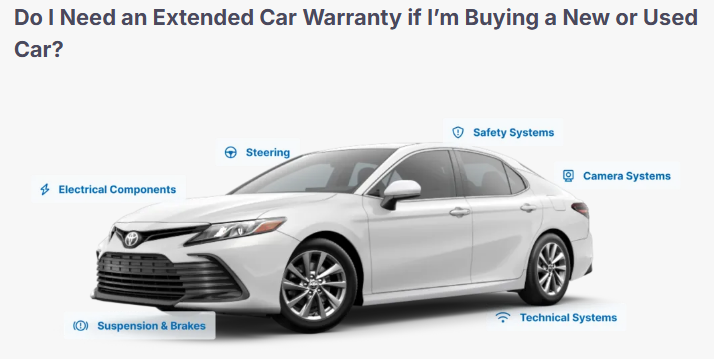
- Covered components: Find out whether major systems such as the engine, transmission, electrical components, air conditioning, and technology are included.
- Exclusions: Pay particular attention to what the contract doesn’t cover. Routine maintenance and normal wear-and-tear items are commonly excluded.
- Deductibles: Is there a deductible for each repair, each component, or each visit? Even a relatively small deductible can add up.
- Additional perks: Some plans may include roadside assistance, towing, trip interruption benefits, or rental car reimbursement.
Most importantly, ask to see the actual contract before purchasing the coverage.
Don’t rely solely on what you’re told at the dealership. The contract determines what will and won’t be covered when you eventually need a repair.
Should You Buy the Warranty at the Dealership?
You don’t necessarily have to.
In fact, shopping around for extended coverage can be just as important as comparing prices when you’re shopping for the car itself.
Dealership Coverage
Buying coverage at the dealership is certainly convenient. You’re already sitting there signing paperwork, so adding the warranty can feel like one more box to check.
But convenience doesn’t always mean you’re getting the best price.
Ask whether the coverage is backed by the vehicle manufacturer or provided by a third-party company. Then get additional quotes before deciding.
And pay attention if the cost is being rolled into your auto loan. Financing the warranty means you could also be paying interest on that additional expense.
Manufacturer Coverage
Depending on the automaker and vehicle, you may be able to purchase extended coverage directly through the manufacturer.
Don’t assume that makes it automatically better or cheaper. Compare the price, coverage limits, exclusions, deductibles, and repair requirements.
Third-Party Vehicle Service Contracts
Third-party providers also offer vehicle service contracts, and these plans may sometimes cost less than dealership options.
But cheaper doesn’t necessarily mean better.
Research the company carefully. Look at customer complaints and reviews, understand how claims are handled, determine where repairs can be performed, and read every exclusion before handing over your money.
Don’t Let the Finance Office Pressure You
One of the most important things to remember when buying a car is that you don’t have to make every decision immediately.
After spending hours shopping, negotiating, completing a credit application, and signing paperwork, it’s easy to experience decision fatigue. That’s exactly when another $20, $30, or $50 added to the monthly payment may not sound like much.
But multiply that amount by 60 or 72 months and suddenly you’re talking about thousands of dollars.
Instead of asking, “How much will this add to my payment?” ask:
“What is the total cost of this coverage?”
That number gives you a much clearer picture of what you’re actually spending.
The Bottom Line: Protect Your Car AND Your Budget
An extended warranty or vehicle service contract isn’t automatically a good deal or a bad deal.
For someone who keeps vehicles for a long time and doesn’t have enough savings to comfortably handle a major repair, the predictability of additional coverage may be appealing.
For someone with a reliable vehicle and a healthy emergency fund, setting aside money for future repairs could make more sense.
The important thing is to make the decision based on your budget, your vehicle, and the actual contract—not pressure at the dealership.
Compare prices. Read the exclusions. Ask about deductibles. Find out who backs the coverage and where you can have repairs completed.
Because living that champagne lifestyle on a bare budget isn’t about automatically choosing the cheapest option.
It’s about knowing exactly where your money is going before you spend it.