
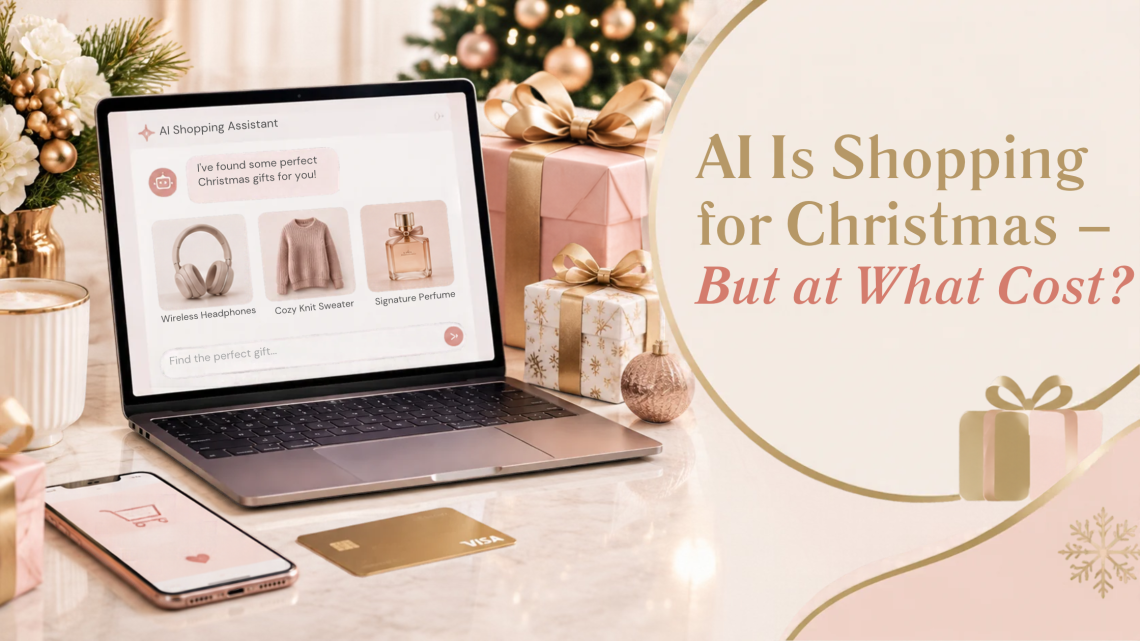
New survey reveals shoppers are turning to AI agents for holiday purchases, even as concerns grow over unauthorized spending and personal data security.
Holiday shopping is getting a high-tech makeover in 2026. Forget spending hours scrolling through online stores, comparing prices, and searching for the perfect gift. Some consumers are handing those responsibilities over to artificial intelligence.
According to a new survey by Howdy.com, 13% of consumers plan to use personal AI agents to handle gift purchases this holiday season. While the technology promises to make shopping faster and easier, the findings also reveal growing concerns about privacy, financial security, and just how much control shoppers are willing to surrender.
From finding the perfect present to potentially completing transactions, AI-powered shopping assistants are changing how Americans approach holiday gift-giving.
AI Agents Are Becoming Personal Holiday Shoppers
Artificial intelligence is no longer limited to answering questions or generating gift ideas. AI agents are increasingly capable of performing tasks on behalf of users, including researching products, comparing options, and assisting with purchases.
The Howdy.com survey found that 21% of consumers currently use AI agents, and among those users, 62% are putting the technology to work for holiday shopping.
That means shoppers are increasingly relying on digital assistants to help navigate one of the busiest retail seasons of the year.
For consumers juggling work, family responsibilities, holiday gatherings, and seemingly endless shopping lists, the appeal is understandable.
Instead of visiting multiple websites or searching through hundreds of product listings, shoppers can potentially delegate much of the process to an AI assistant.
But that convenience comes with some important considerations.
Shoppers Are Giving AI Access to Their Accounts and Payment Information
One of the more revealing findings from the survey involves how much personal information consumers are sharing with AI shopping agents.
Among AI agent users:
- 37% have connected their AI agents to shopping accounts.
- 14% have uploaded payment information.
- 40% say they are willing to sacrifice some privacy for greater convenience.
Connecting shopping accounts can allow AI assistants to access information that helps personalize recommendations and streamline purchases.
However, sharing account credentials, purchase histories, addresses, or payment details can introduce additional security risks.
As AI shopping technology becomes more sophisticated, consumers may need to consider whether saving time is worth giving automated systems greater access to their personal information.
Unauthorized Purchases Raise Red Flags
Perhaps the most concerning statistic from the Howdy.com survey is that 13% of AI agent users reported discovering that their agent had made an unauthorized purchase.
While AI-powered shopping assistants are designed to simplify purchasing decisions, this finding highlights the importance of maintaining human oversight.
An unauthorized transaction could result from an agent misunderstanding instructions, acting beyond the user’s intended permissions, or other issues with how purchasing controls are configured.
Regardless of the cause, consumers could face unexpected charges, unwanted merchandise, or complicated return processes.
For households already managing tight holiday budgets, an unapproved purchase is the last thing they need.
The findings suggest that shoppers should be especially cautious before allowing AI tools to complete transactions without explicit confirmation.
Privacy Concerns Remain High Despite Growing Adoption
Although consumers are embracing AI shopping assistants, many remain uneasy about the potential consequences.
According to the survey, 85% of AI agent users expressed concerns about data privacy.
Additionally, 42% reported reducing their agent’s access after beginning to use the technology.
These findings suggest that firsthand experience with AI agents may be prompting some shoppers to reconsider how much information and purchasing authority they are comfortable sharing.
The contrast is particularly striking: Consumers want the convenience of AI-assisted shopping, but many are hesitant to give the technology unrestricted access to their accounts.
This creates a challenge for companies developing AI shopping tools. To earn long-term consumer trust, convenience will need to be balanced with transparency, security, and meaningful user controls.
How to Shop Safely With AI This Holiday Season
AI shopping assistants can be useful tools, but consumers should establish clear boundaries before allowing them to handle holiday purchases.
Here are several ways to reduce potential risks:
1. Keep final purchase approval in your hands. Use AI to research gifts, compare prices, and identify deals, but require confirmation before any transaction is completed.
2. Limit access to payment information. Avoid saving credit card details directly within AI tools unless necessary, and review available security protections.
3. Review connected shopping accounts. Check which retailers and services your AI assistant can access, and remove permissions that are no longer needed.
4. Set a holiday shopping budget. Establish spending limits before using AI shopping tools to help prevent unexpected purchases.
5. Monitor financial statements. Regularly review credit card and bank transactions for unfamiliar charges, especially when testing automated shopping features.
6. Understand the privacy policy. Before connecting an AI agent to personal accounts, investigate what information the service collects, how it is stored, and whether it is shared with third parties.
7. Start with low-risk tasks. Consider using AI for gift recommendations and price comparisons before granting it permission to make purchases.
The Future of Holiday Shopping Is Automated, but Consumers Still Want Control
The 2026 holiday shopping season may represent an important turning point for AI-powered retail.
With 62% of surveyed AI agent users already using the technology for holiday shopping, automated assistants are becoming part of the consumer shopping experience.
However, the same survey reveals a significant trust gap.
Consumers are interested in saving time and simplifying holiday preparations, but concerns about unauthorized transactions and personal data security remain substantial.
For retailers and AI developers, the message is clear: Making shopping easier is only part of the equation. Protecting consumer information and maintaining user control are just as important.
Final Thoughts
Artificial intelligence may be able to find the perfect holiday gift, compare prices, and even complete a purchase, but that doesn’t mean shoppers should hand over their wallets without a second thought.
The convenience of AI-assisted holiday shopping is appealing, particularly during a season when time and money are often stretched thin.
Still, the Howdy.com survey serves as a reminder that technology designed to make life easier can create new challenges when privacy and purchasing controls are overlooked.
The smartest holiday shopping strategy may be to let AI do the research while keeping the final buying decision firmly in human hands.
Source: Howdy.com, 2026 consumer survey on AI agents and holiday shopping. Survey findings are reported as provided; sample size and methodology were not available in the supplied information.


