Before you toss that worn-out toothbrush, consider giving it a new job. That little brush can tackle some of the most frustrating spots in your home—and help you avoid buying another specialty cleaning gadget.
Here at Champagne Style Bare Budget, we love an inexpensive solution that earns its place in the cleaning cabinet. A soft-bristled toothbrush is perfect for reaching narrow corners, scrubbing small details, and loosening grime where a cloth just can’t fit.
Ready to put those bristles to work? Here are 12 practical ways to use a toothbrush for household cleaning.
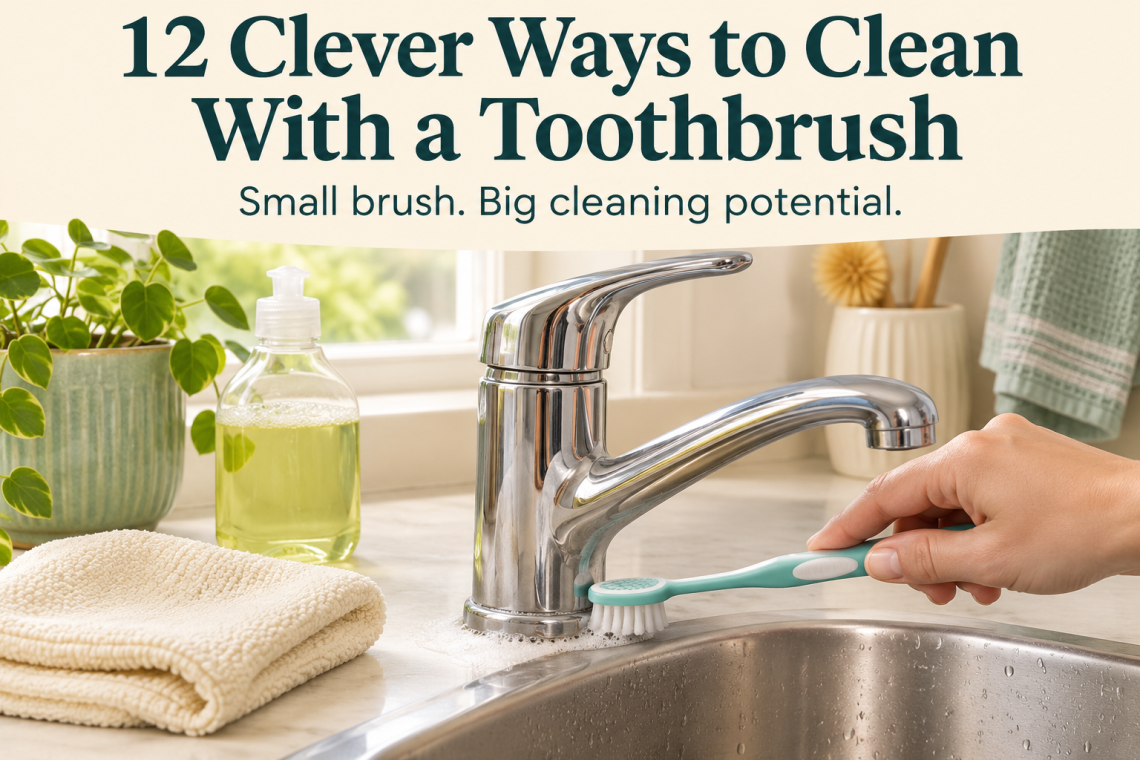
1. Scrub Around Faucets
Grime loves to collect around the base of kitchen and bathroom faucets. A toothbrush can reach the little seam where the fixture meets the sink.
Use a small amount of mild dish soap and water, gently scrub around the base, and wipe everything clean with a damp cloth. Dry with a soft towel for a finishing shine.
2. Freshen Up Tile Grout
For small areas of dirty grout, a toothbrush gives you more control than a large scrub brush.
Use a cleaner suitable for your tile and grout, scrub gently, and rinse thoroughly. Focus on a few lines at a time instead of trying to tackle the whole floor with one tiny brush. Your knees will thank you!
3. Clean Sliding Door and Window Tracks
Window tracks seem to collect every speck of dust that enters the house.
Start by vacuuming loose dirt. Then use a toothbrush to loosen debris in the corners and along the grooves. Follow with a damp cloth, keeping excess water away from surrounding walls and woodwork.
This is a great little task to tackle while you already have the windows open for a seasonal refresh.
4. Detail Cabinet Handles and Drawer Pulls
Kitchen handles get plenty of attention from our hands, but their edges and undersides can get overlooked during cleaning.
A soft toothbrush lightly dampened with soapy water can help remove buildup around decorative details. Wipe clean and dry promptly, especially near wooden cabinets.
5. Scrub Around Sink Drains
A toothbrush is handy for cleaning around the visible rim of a sink drain, where residue tends to gather.
Gently scrub with mild soapy water, then rinse. Keep the brush on accessible surfaces, and avoid pushing debris farther into the drain.
Give this brush its own designated job—this is one cleaning tool you don’t want wandering over to the kitchen utensils.
6. Clean Refrigerator Shelf Grooves
Spills can settle into refrigerator shelf grooves and drawer corners, leaving behind sticky spots that a quick wipe misses.
Remove the shelf or drawer when possible, following the appliance instructions. Use a toothbrush and mild soapy water to loosen residue, then rinse and dry before putting everything back.
Let cold glass shelves come closer to room temperature before washing them, and avoid sudden temperature changes.
7. Refresh Rubber Shoe Soles
If your sneakers are looking a little tired, start with the soles.
Use a separate toothbrush and a small amount of dish soap mixed with water to scrub textured rubber edges and grooves. Wipe away the residue with a damp cloth.
Check the shoe’s care instructions first, and keep the soapy water away from suede, leather, and other delicate materials.
8. Clean Washable Combs and Hairbrushes
Styling products can leave buildup between comb teeth and around the base of hairbrush bristles.
Remove trapped hair first, then use a toothbrush to gently scrub washable plastic tools with mild shampoo and water. Rinse and allow them to dry thoroughly.
Avoid soaking wooden, cushioned, or natural-bristle brushes unless their care instructions allow it.
9. Reach Into Soap Dishes and Toothbrush Holders
Bathroom accessories can get surprisingly grimy, especially around drainage holes and raised edges.
A toothbrush helps reach those awkward spots. Wash with dish soap and water, rinse well, and let the item dry completely.
Use a bathroom-only cleaning brush for this job.
10. Loosen Dust From Air Vent Covers
A dry toothbrush can help dislodge dust from the corners and slats of accessible vent covers.
Vacuum first, then gently brush stubborn areas while holding the vacuum nozzle nearby to catch loose dust. Avoid reaching into ducts or brushing electrical components.
For removable covers, follow the manufacturer’s cleaning directions.
11. Detail Kitchen Backsplash Edges
The seam behind the sink and the corners of a backsplash can collect splashes and cooking residue.
Use a soft toothbrush with a surface-appropriate cleaner to gently work along those edges. Wipe clean afterward, and avoid aggressive scrubbing on caulk, damaged grout, or delicate finishes.
Sometimes those little details make the whole kitchen feel fresher.
12. Clean Small Household Items
Washable plastic organizers, reusable cleaning-tool handles, and the corners of wastebaskets can all benefit from a little detail work.
A toothbrush is especially useful around ridges, seams, and textured surfaces. Choose mild soapy water when appropriate, then rinse or wipe clean and dry.
Always check care instructions before cleaning anything with a coating, electrical parts, or delicate finish.
A Few Tips Before You Start Scrubbing
Turn your toothbrush into a useful cleaning tool with a few simple habits:
- Choose soft bristles. Stiff bristles and heavy pressure can scratch or damage surfaces.
- Label your brushes. Keep separate brushes for bathroom jobs, kitchen cleaning, and shoes.
- Keep cleaning brushes away from personal toothbrushes. A clearly marked container helps prevent mix-ups.
- Test delicate surfaces first. Try an inconspicuous spot before scrubbing.
- Use the right cleaner. Follow product labels and never mix cleaning products.
- Rinse and air-dry after use. Replace brushes when they become dirty, damaged, or badly splayed.
If you’re repurposing a toothbrush, wash and rinse it thoroughly first. For kitchen jobs near food-contact surfaces, a new, inexpensive brush reserved for cleaning is a sensible choice.
A Small Tool That Earns Its Keep
You don’t always need a cabinet full of fancy supplies to make your home feel clean and cared for. Sometimes, the most useful tool is one you already have.
A toothbrush won’t replace your mop or your favorite cleaning cloth, but it can handle the tiny spaces they miss. And getting a little more use out of an everyday item? That fits a Champagne Style Bare Budget home beautifully.
What’s the most unexpected thing you’ve cleaned with a toothbrush? Share your favorite trick in the comments!
“For more ways to stay ahead of everyday messes, check out these little habits to help keep your home clean and beautiful over on my sister blog, Adventures of Frugal Mom.”