

For many women, family planning isn’t only a personal or medical decision. It can also be a major financial one.
Egg freezing has given women another option when it comes to deciding if and when they want to have children. But that option can come with a price tag that forces women to weigh fertility goals against other financial priorities, including buying a home, paying off debt, saving for retirement, and building an emergency fund.
A survey from BadCredit.org of 505 single U.S. women between the ages of 18 and 49 highlights just how significant those financial tradeoffs can be.
Women Are Interested—But Cost Is a Major Barrier
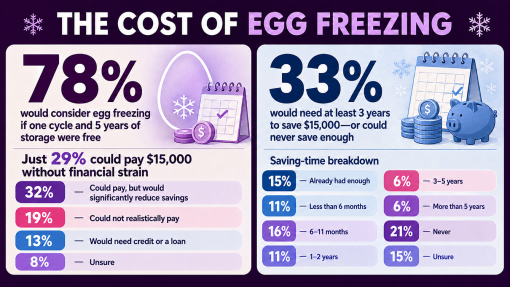
According to the survey, 78% of women who want children said they would consider freezing their eggs if the procedure were free.
That number says a lot.
For many women, the question may not be whether they are interested in egg freezing. Instead, the bigger question is whether they can afford it without sacrificing their financial stability.
The survey used an estimated $15,000 cost when asking women how they might pay for the procedure. For some respondents, coming up with that amount could take years.
Twenty-one percent said they could never realistically save $15,000, while another 12% estimated it would take them three years or longer.
Would You Go Into Debt to Freeze Your Eggs?
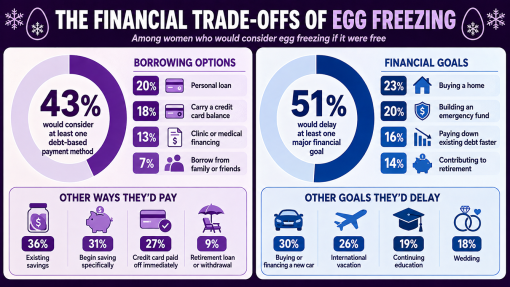
One of the most interesting findings is how many women would consider borrowing money to make egg freezing possible.
Twenty percent said they would consider taking out a personal loan, while 18% would be willing to carry credit card debt.
That creates another layer to an already complicated decision.
A medical procedure may be completed relatively quickly, but debt used to pay for it could remain in a woman’s monthly budget for years. Interest charges can also make an already expensive procedure cost considerably more over time.
Before financing any large medical expense, it is important to look beyond the monthly payment. Consider the interest rate, repayment period, total amount you will repay, and how the new payment fits alongside your existing financial obligations.
Egg Freezing Could Mean Putting Homeownership on Hold
For some women, finding the money wouldn’t necessarily mean borrowing it. Instead, it could mean redirecting money from another financial goal.
The survey found that 23% would delay buying a home to pay for egg freezing.
Another 20% said they would delay building an emergency fund, while 16% would postpone paying down existing debt. Fourteen percent would delay making retirement contributions.
These aren’t small financial sacrifices.
Money set aside for a down payment, retirement, or emergencies often represents months or even years of careful saving. Using those funds for another priority can significantly change someone’s long-term financial plan.
At the same time, financial priorities are deeply personal. What looks like a sacrifice to one person may feel like a worthwhile investment to someone else.
Some Women Would Have to Drain Their Savings
Even having enough money in the bank doesn’t necessarily mean the procedure feels affordable.
Thirty-two percent of respondents said they could pay for egg freezing but doing so would significantly deplete their savings.
Only 15% said they currently had $15,000 available, while another 11% believed they could save that amount within six months.
This is where having a complete picture of your finances becomes especially important.
Spending most of your savings on one expense can leave very little cushion for an unexpected car repair, job loss, medical bill, home repair, or another emergency.
The Timing Creates a Financial Catch-22
Egg freezing presents an unusual financial challenge because the years when women may be considering fertility preservation can overlap with the years when they are still establishing their careers and building wealth.
Consumer finance expert Erica Sandberg described it as a “conundrum,” noting that women may be considering the procedure before reaching their peak earning years.
That means someone could simultaneously be trying to pay student loans, establish an emergency fund, contribute to retirement, save for a house, and pay for fertility preservation.
There may simply not be enough money to comfortably accomplish everything at once.
How to Financially Prepare for Egg Freezing
If egg freezing is something you’re considering, treat the financial side of the decision with the same care you would give any other major expense.
Start by finding out the actual expected cost for your situation rather than relying solely on a national estimate. Ask about consultations, medications, testing, retrieval, anesthesia, storage fees, and potential future costs that may not be included in the initial price.
Then look at your current savings, monthly cash flow, insurance coverage, employer benefits, and financing options.
Most importantly, understand what you would be giving up or delaying.
Would paying for the procedure wipe out your emergency fund? Would you stop contributing to retirement? Would you carry a high-interest credit card balance? Would purchasing a home need to wait another year?
There isn’t one financial decision that’s right for every woman.
When Personal Choices Meet Financial Reality
The BadCredit.org survey illustrates something bigger than the price of a single medical procedure. Women are constantly making financial decisions in which money, careers, relationships, health, and future plans intersect.
For women interested in egg freezing, the $15,000 question isn’t simply, “Can I pay for this?”
It may also be, “What else will I have to give up to make it happen?”
That’s why conversations about financial wellness need to include more than budgeting and credit scores. Sometimes money decisions are tied to deeply personal hopes for the future.
Knowing the numbers doesn’t make those decisions easy, but it can help women make them with a clearer understanding of what the choice may mean for their finances today—and years down the road.
Survey data referenced in this article comes from BadCredit.org’s survey of 505 single U.S. women ages 18–49. Individual egg-freezing costs and medical needs vary. Readers should consult qualified medical and financial professionals when making decisions about fertility treatment and financing.