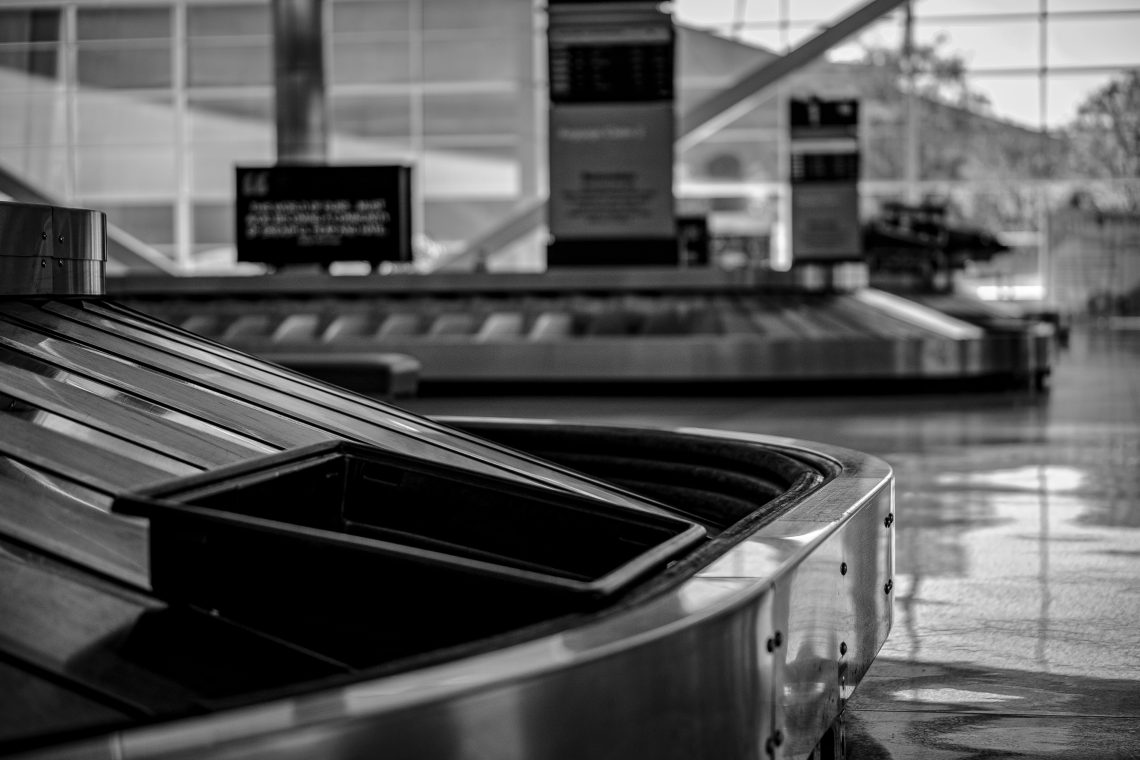
There are few things that can put a damper on a trip faster than standing at baggage claim watching the carousel go around…and around…and around…only to realize your suitcase isn’t coming.
And unfortunately, it happens more often than you might think.
More than 1 million checked bags were mishandled by U.S. airlines during the first six months of 2026, according to data from the U.S. Department of Transportation’s Air Travel Consumer Report.
That works out to approximately 5,815 mishandled bags every single day.
Now, before you swear off checking luggage forever, there is some good news. Overall baggage handling has improved compared with last year. But the numbers also show that your chances of having a baggage problem can vary quite a bit depending on which airline is operating your flight.
And when you’re trying to travel on a budget, a missing suitcase can become more than an inconvenience. Replacing clothes, toiletries and other necessities at your destination can quickly turn an affordable getaway into an expensive one.
Which U.S. Airlines Mishandled the Most Bags?
Travel company Global Work & Travel analyzed Department of Transportation data covering more than 213 million checked bags between January and June 2026.
Here’s how reporting U.S. airlines ranked based on the number of mishandled bags per 100 bags enplaned:
| Rank | Airline | Bags Enplaned | Bags Mishandled | Mishandled Per 100 Bags |
|---|---|---|---|---|
| 1 | American Airlines | 34,541,265 | 251,976 | 0.73 |
| 2 | Envoy Air | 5,224,762 | 37,723 | 0.72 |
| 3 | United Airlines | 29,253,054 | 192,191 | 0.66 |
| 4 | SkyWest Airlines | 14,734,864 | 81,434 | 0.55 |
| 5 | Republic Airways | 4,887,188 | 25,990 | 0.53 |
| 6 | Alaska Airlines | 14,126,041 | 74,896 | 0.53 |
| 7 | Frontier Airlines | 4,816,542 | 24,733 | 0.51 |
| 8 | Spirit Airlines | 1,870,785 | 8,719 | 0.47 |
| 9 | PSA Airlines | 6,044,565 | 26,731 | 0.44 |
| 10 | Delta Air Lines | 40,560,183 | 153,022 | 0.38 |
| 11 | Southwest Airlines | 46,350,429 | 148,875 | 0.32 |
| 12 | JetBlue Airways | 7,188,577 | 22,135 | 0.31 |
| 13 | Allegiant Air | 3,474,622 | 4,068 | 0.12 |
Source: U.S. Department of Transportation Air Travel Consumer Report, January–June 2026. Rankings are based on reporting operating carriers and mishandled bags per 100 bags enplaned.
American Airlines Had the Highest Mishandling Rate
According to the data, American Airlines had the highest baggage mishandling rate, with 0.73 mishandled bags for every 100 checked.
American also had the largest total number of mishandled bags during the six-month period, with 251,976 bags reported.
Envoy Air came in just behind American with a rate of 0.72 bags per 100, followed by United Airlines at 0.66.
At the other end of the list was Allegiant Air.
The airline reported a baggage mishandling rate of just 0.12 bags per 100, the lowest among the reporting airlines included in the analysis. JetBlue followed at 0.31, with Southwest close behind at 0.32.
Of course, baggage statistics shouldn’t be the only thing you consider when booking a flight. Ticket price, baggage fees, nonstop availability, departure times and the number of connections can all make a difference—especially when you’re trying to keep travel costs under control.
Still, knowing the numbers doesn’t hurt.
The Good News: Airlines Are Mishandling Fewer Bags
While more than one million mishandled bags sounds alarming, the overall trend is actually moving in the right direction.
The baggage mishandling rate among reporting airlines dropped from 0.52 per 100 bags during the first half of 2025 to 0.49 during the same period in 2026.
The total number of mishandled bags also declined from 1,152,475 to 1,052,493.
June’s numbers continued that trend. Airlines handled more than 39.3 million checked bags during the month and mishandled 194,063 of them. During June 2025, that number was 221,543.
So while lost, delayed and damaged luggage certainly hasn’t disappeared, the numbers suggest airlines are making some progress.
Before Checking Your Suitcase, Take a Picture
One of the easiest ways to protect yourself costs absolutely nothing: pull out your phone and take a few pictures.
Before handing over your suitcase, take a clear photo of the outside of your bag.
Then open it up and take another picture of what’s inside.
Why?
If your luggage disappears or arrives damaged, those photos can help you describe the suitcase and document what you packed.
It’s one of those tiny travel habits that takes less than a minute but could save you a huge headache later.
Keep Your Most Important Things in Your Carry-On
I know it can be tempting to throw everything into your checked suitcase so you don’t have to lug it through the airport, but some things simply aren’t worth the risk.
Keep important or difficult-to-replace items with you whenever possible, including:
- Passports and identification
- Prescription medications
- Keys
- Electronics
- Chargers
- Important documents
- Jewelry or sentimental items
- A change of clothes
- Basic toiletries
If your suitcase doesn’t arrive with you, having enough essentials to get through the first day or two can make the situation much less stressful.
This is especially important when traveling internationally or taking an extended trip.
Remove Those Old Baggage Stickers
Here’s another travel tip that costs nothing.
Before heading to the airport, look over your suitcase and remove old airline stickers, barcodes and baggage tags.
Those little stickers left over from previous trips may contain outdated routing information.
You want the current baggage label to be the only routing information airline baggage systems need to read.
While you’re at it, check your luggage tag to make sure your contact information is current.
Put Your Contact Information INSIDE Your Suitcase Too
Most of us put a luggage tag on the handle and call it a day.
But what happens if that tag gets ripped off?
Put a piece of paper or card inside your suitcase containing your name, phone number and email address.
If the exterior tag disappears, airline or airport employees may still be able to identify the bag and get it back to you.
I’d also avoid putting unnecessary personal information on an exterior luggage tag. A phone number and email address are generally enough to help someone contact you without advertising your home address to everyone walking through the airport.
Don’t Forget About Flight Cancellations
Baggage wasn’t the only area highlighted in the latest Department of Transportation report.
During the first six months of 2026, reporting marketing carriers cancelled 85,998 scheduled flight operations, representing approximately 2.23% of scheduled flights.
During the same period in 2025, the cancellation rate was 1.57%.
That’s another reminder that your travel budget shouldn’t end with airfare and hotel reservations.
Whenever possible, leave a little breathing room in your vacation budget for the unexpected.
That could mean an extra meal at the airport, transportation after a cancellation, toiletries because your suitcase didn’t arrive or even an unexpected hotel stay.
You don’t necessarily need hundreds of dollars sitting around “just in case,” but having a small travel emergency fund can prevent an inconvenience from turning into a financial headache.
A Little Preparation Can Save You Money and Stress
No airline can guarantee that every suitcase will arrive exactly when and where it’s supposed to.
And I certainly wouldn’t choose an airline based on baggage statistics alone.
Sometimes the cheapest fare, best flight time or only nonstop option is going to make the most sense for your trip.
But there are things we can control.
Take pictures of your suitcase. Keep irreplaceable items with you. Remove outdated baggage stickers. Put your contact information inside the bag. Pack a few necessities in your carry-on.
And maybe don’t put your favorite outfit—the one you absolutely have to wear on night one—in the suitcase you’re handing over at check-in.
Because traveling Champagne Style on a Bare Budget isn’t just about finding the cheapest ticket.
It’s also about being prepared enough that when something goes wrong, it doesn’t wreck your trip—or your wallet.
Methodology
Global Work & Travel analyzed data contained in the August 2026 Air Travel Consumer Report published by the U.S. Department of Transportation’s Office of Aviation Consumer Protection.
The baggage rankings use January through June 2026 data from the report’s Mishandled Baggage ranking of U.S. reporting operating carriers. The Department of Transportation measures baggage performance based on the number of bags mishandled per 100 bags enplaned.
Baggage information included in the report is collected by the Department’s Bureau of Transportation Statistics.