

When people talk about moving to a new country, they often focus on the big things. Finding a place to live, getting a job, learning a new culture, or figuring out immigration paperwork. Those are certainly important milestones but there is another challenge that does not get as much attention and yet affects almost every aspect of daily life. This is banking.
Before I moved abroad, I assumed opening a bank account would be one of the easiest items on my list. Walk into a branch, show some identification, sign a few forms, and you are done. What I quickly discovered was that banking in a new country is about much more than managing money. It is about creating trust, building a financial identity, and learning an entirely new system.
Opening a bank account feels surprisingly similar to starting life over for many immigrants.
One of the biggest surprises is that your financial history often does not follow you across borders. You could have spent years building a solid financial reputation in your home country. Paying your bills on time, maintaining savings, and managing credit responsibly. Yet when you arrive somewhere new, none of that history may be visible to local institutions.
You are suddenly not the financially responsible adult you have always been. On paper, you are someone with no local financial history at all.
That can be frustrating.
I think many immigrants experience a sense of disbelief when they realize that years of responsible financial behavior do not automatically transfer into credibility abroad. It is not that anyone doubts your character; it is simply that financial systems are often designed within national boundaries. The result is that newcomers frequently find themselves rebuilding trust from scratch.
Then there is the challenge of sending money back home.
For many immigrants, supporting family members in another country becomes part of everyday financial life. It seems simple in theory but can quickly become complicated in practice. Exchange rates fluctuate. Transfer fees add up. Processing times vary. Certain transactions require additional documentation or verification.
The first time you send money internationally, you discover just how many moving pieces are involved.
You learn to compare transfer services, monitor exchange rates, and understand regulations that never mattered before. A transaction that takes seconds domestically may require much more planning when it crosses borders.
What starts as a routine transfer can become an unexpected lesson in global finance.
Another adjustment involves housing.
Many newcomers are shocked to learn that renting an apartment often depends on more than simply having enough money to pay the rent. Landlords may request credit reports, financial references, or proof of local banking history.
This creates an unusual situation. You may have stable employment and sufficient savings yet still face obstacles because the systems used to evaluate reliability depend mostly on local financial records.
The same challenge often appears when applying for loans, financing, or credit cards.
Credit is not simply about borrowing money, in many countries. It is a tool used to demonstrate financial responsibility. Building that history takes time, patience, and consistency.
For immigrants, this process can feel quite humbling. You know you are responsible because you have spent years managing your finances successfully. The challenge is finding ways to prove it in a framework that does not yet recognize your past experience.
And then there are the everyday tasks that suddenly become educational experiences.
Setting up direct deposit. Paying utility bills. Understanding overdraft policies. Learning the difference between account types. Navigating online banking platforms.
These are things most local residents often take for granted because they grew up with the system. For newcomers, every step can involve learning new terminology, unfamiliar procedures, and different expectations.
I often think these small moments deserve more recognition because they reveal how deeply financial systems are connected to culture.
Something as simple as paying a bill can teach you about how a society organizes trust, responsibility, and convenience. The process may be entirely different from what you are used to, requiring both flexibility and patience.
Over time, those small lessons accumulate.
You begin to understand not only how the banking system works but also how the broader society functions.
Perhaps the most important realization is that banking abroad is not really about money alone.
It is about belonging.
A bank account is one of the first indicators that you are establishing roots in a new place. It allows employers to pay you. It helps you secure housing. It creates a financial footprint that gradually becomes part of your new identity.
Each statement, payment, and transaction contributes to a growing record that says, “I am here. I am participating. I am building a life.”
That process can feel slow, especially in the beginning. But it is also empowering.
Every newcomer understands what it means to arrive in a place where nobody knows your history. You carry your experiences, skills, values, and accomplishments with you, yet much of that remains invisible in the beginning.
Building a financial identity is one of the ways you begin making those qualities visible again.
So, when people ask me about the immigrant experience, I often tell them that banking is far more significant than it seems.
It is not just about opening an account.
It is about learning new rules, overcoming unexpected obstacles, supporting loved ones across borders, and gradually earning trust in a system that is still getting to know you.
And in many ways, that journey mirrors the immigrant experience itself: starting fresh, adapting constantly, and building a future one step at a time.
About the Author
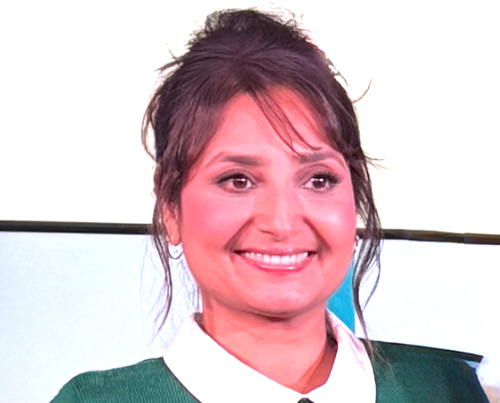
Pallawi Uday Sing is an author and storyteller whose book The American Dream explores immigration through a personal and reflective lens. Her writing capture’s identity shifts, cultural transitions, and financial realities, offering honest insight into life between two worlds.