
Who hasn’t dreamt of driving their ultimate car? It’s more than just a ride; it’s about turning a fantasy into reality and enjoying every freeway mile. But buying your dream car isn’t just about picking the shiniest model or the fastest engine. It involves careful planning and smart choices to ensure you’re making a worthwhile investment.
Navigating the path to owning your dream car requires more than a simple visit to the dealership. Strategic research, budgeting, and understanding market trends are critical steps. Whether you’re eyeing a sleek sports car or a luxurious sedan, knowing the rules can save you headaches and dollars. So buckle up as we guide you through the essential rules to steer you toward a sound purchase decision.
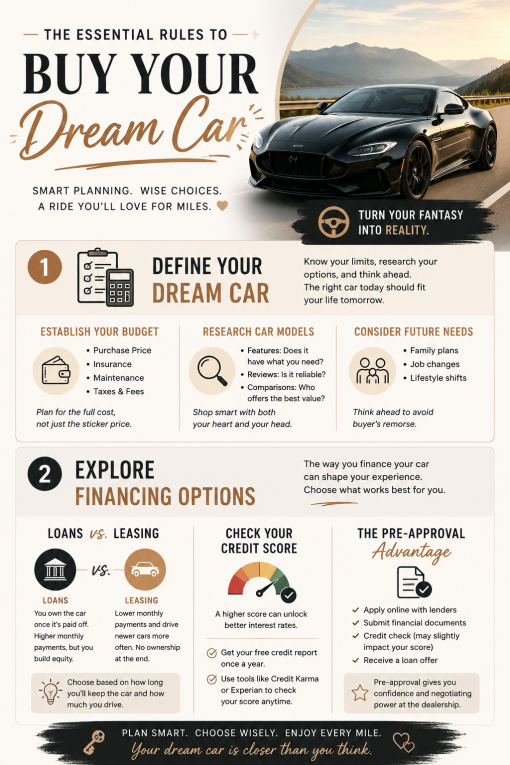
Define Your Dream Car
You’ve daydreamed about it, and maybe even tested it on virtual tracks. But what does owning your dream car truly entail? Let’s dive into how to turn that vision into a reality by focusing on knowing your limits, researching options, and anticipating life’s changes.
Establish Your Budget
Setting a budget is not just about counting pennies; it’s about smart planning. Start by figuring out what you can really afford. This means not just the sticker price but also insurance, maintenance, and even taxes. Missing any of these costs is like forgetting about the iceberg beneath the Titanic.
- Purchase Price: Is the upfront cost within reach?
- Insurance: Different cars mean different premiums.
- Maintenance: Routine service and unexpected repairs can add up.
- Taxes and Fees: Registration and state taxes vary widely.
Having a realistic budget ensures you’re not caught off-guard. A helpful read on this would be How Much Should I Spend on a Car? as it highlights all these hidden costs.
Research Car Models
Once you know your financial limits, the fun part begins: choosing the car! Imagine yourself sitting in the driver’s seat of models like a sleek sedan, rugged SUV, or even that zippy convertible. Here’s how to narrow down your options:
- Features: Does it have what you need? Airbags, navigation, heated seats?
- Reviews: Check what other drivers say. Is it reliable?
- Comparisons: Look at different brands to see who offers the best value.
These steps will guide you toward informed choices, so you’re not just shopping with your heart but your head, too. For some insightful tips, check out 5 Tips When Researching a New Car.
Consider Future Needs
Life is full of surprises. Today’s perfect-fit car might not be tomorrow’s go-to. Ask yourself some future-focused questions:
- Family Plans: Is your family going to grow?
- Job Changes: Will a new job mean different commuting needs?
- Lifestyle Shifts: Will you need more cargo space for hobbies or travel?
Thinking ahead helps prevent the buyer’s remorse that comes with unexpected turns in life’s road.
Buying your dream car is a journey, just like life itself. By setting clear parameters, doing your homework, and accounting for future changes, you’ll steer clear of potholes and enjoy the ride
Explore Financing Options
Buying your dream car is a thrilling adventure, but how will you finance it? Whether you’re dreaming of a sleek sports car or a trusty family SUV, exploring different financing options is key. Understanding the differences in how you pay can make or break your car buying experience. Let’s dive into the different pathways you can take to own that dream vehicle.
Understanding Loans vs. Leasing
When it comes to financing a car, you generally have two options: loans and leasing. Each has its own benefits and drawbacks that can impact your decision:
- Loans: When you take out a loan to buy a car, you own the vehicle once you pay off the loan. Your monthly payments may be higher, but each payment builds equity in your car. Learn more about financing vs leasing a car for a comprehensive view.
- Leasing: Leasing a car means you’re essentially renting it for a few years. Monthly payments are typically lower, but you don’t gain ownership of the vehicle. At the end of the lease term, you need to return the car or purchase it for a residual value. Explore more about leasing and buying the differences explained.
So, what’s the right choice for you? Consider how long you plan to keep the car and how much you drive annually. Leasing might be ideal if you love driving a new ride every few years without commitments, whereas loans suit those looking for long-term ownership.
Check Your Credit Score
Your credit score is like a financial report card that can open or close doors to various financing options. It significantly influences the loan offers you might receive. A higher score usually means better interest rates. But how do you find out your credit score?
- Free Reports: You can obtain a free credit report from major credit bureaus once a year. Websites like Experian provide insights into what scores are used for auto loans.
- Online Tools: Platforms like Credit Karma and others allow you to view your score any time, helping you keep track and plan. Discover what FICO Auto Score means for your loan eligibility.
Checking your credit score is like knowing the playbook before a big game, allowing you to anticipate any setbacks and improve your standing beforehand.
Pre-Approval Process
Think pre-approval is just extra paperwork? Think again. Getting pre-approved for a loan can be a game-changer by giving you the upper hand in negotiations with dealers. Here’s how it works:
- Apply Online: Different lenders have online applications for pre-approval, streamlining the process.
- Submit Documents: Be prepared to present financial documents like pay stubs and tax returns.
- Credit Check: Expect a hard credit inquiry, though this might slightly impact your score.
- Receive Offer: If approved, you’ll receive a conditional loan offer stating the amount and interest rate.
A pre-approved loan can give you a clear budget, making negotiation smoother and preventing you from overextending yourself financially. Learn more about the preapproval process.
By exploring these financing options, you set the stage for smart financial choices on your path to driving off in your dream car.
Evaluate the Market
When you’re on the hunt for your dream car, understanding the market can make a world of difference. Just like a savvy shopper in a grocery aisle, you need to know when and where to find the best deals. This section will guide you through timing your purchase, comparison shopping, and considering certified pre-owned cars to ensure you get the most bang for your buckTiming Your Purchase
When it comes to buying a car, timing is everything. Just as you wouldn’t buy a winter coat in the middle of summer, knowing the right time to buy a car can lead to significant savings.
- End-of-Year Sales: Many experts agree that buying a car at the end of the year is ideal. Dealerships are eager to clear out inventory to make room for newer models, which often means dealing on both new and old models. According to NerdWallet, holidays like the Fourth of July and the end of December offer great discounts.
- Model Launch Season: When new models are released, older models typically see a price drop. Late summer and early fall can be prime times to pounce on a deal for the previous year’s vehicles.
Comparison Shopping
Why settle for the first dealership you visit when you could be missing out on a better deal elsewhere? Just like finding the best-priced apples in a market, comparison shopping is crucial.
- Online Resources: Utilize car comparison tools like those offered by Edmunds or Kelley Blue Book to see side-by-side analyses of different models. These tools can highlight differences in price, specs, and features.
- Multiple Dealerships: Physically visiting or reaching out to multiple dealerships can provide a broader perspective on pricing and offers. Some might even match or beat a competitor’s price to win your business.
Consider Certified Pre-Owned Options
A certified pre-owned (CPO) vehicle can be a wise choice for those looking to save money without compromising on quality.
- Peace of Mind: CPO vehicles typically come with extended warranties and undergo thorough inspections, offering the buyer a sense of security. According to Consumer Reports, these cars are often in near-mint condition.
- Additional Perks: Many CPO programs include benefits such as roadside assistance and free maintenance. For instance, TrueCar highlights that some luxury brands offer complimentary maintenance and trip protection, making CPO an attractive option for budget-conscious buyers who don’t want to sacrifice quality.
Understanding these aspects can lead to a smarter purchase, ensuring that your dream car is not only a pleasure to drive but also a wise financial decision.
Test Driving and Inspection
When it comes to making a significant investment like buying your dream car, test driving and inspecting the vehicle are crucial steps you can’t afford to skip. Let’s explore why these actions are essential to your decision-making process.
The Importance of Test Drivie
Think about it: Would you buy a pair of shoes without trying them on? Probably not. Test driving a car works the same way. It’s your chance to get a feel for how the car handles and how you feel behind the wheel.
During a test drive, keep an eye on these factors:
- Comfort and Fit: Ensure the seats are comfortable and the controls are within easy reach.
- Performance: Listen to the engine, note the acceleration, and see how it handles corners.
- Braking and Steering: Pay attention to how the brakes respond and how smoothly the car steers.
Remember, the experience of driving should meet your needs and expectations. According to Kia of LaGrange, the test drive can familiarize you with the car’s features and comfort level, impacting your buying decision significantly.
Professional Inspection
While a test drive gives you a feel for the car, a professional inspection dives deeper. Imagine it as the doctor’s check-up for the vehicle’s health. A trained mechanic can spot potential issues that you might miss, saving you from future headaches.
Here are some benefits of a professional inspection:
- Uncover Hidden Issues: A mechanic can identify problems like engine trouble that aren’t apparent during a test drive.
- Safety Assurance: Ensures the car is roadworthy and safe to drive.
- Cost Efficiency: Catching problems early can save you a lot of money in the long run.
Getting a vehicle inspection can be invaluable, not just for peace of mind but for preserving your investment, as highlighted by Steve’s Imports. So, don’t skip this step; it could be the difference between a dream car and a nightmare.
Finalizing the Purchase
Making your dream car a reality doesn’t just stop at choosing the right one. The final steps in buying your car involve strategic negotiation and careful handling of the paperwork. Tackling these steps confidently will ensure you drive away satisfied and equipped with everything you need.
Negotiation Tips
Ready to talk numbers? Negotiation might seem intimidating, but remember, it’s all about communication. Here are some simple strategies to help you get the best deal:
- Do Your Homework: Before stepping into the dealership, research the car’s market value using websites like and get a sense of what similar models are selling for.
- Focus on the Total Price: Sometimes, salespeople will try to entice you with lower monthly payments, but these can end up costing more in the long run. Keep your eyes on the total price. Resources like LendingTree offer tips on honing in on the “drive-away” cost.
- Be Polite but Firm: Politeness goes a long way. Tell the dealer your budget, the price you’ve researched, and stick to your guns. Consumer Reports suggests gradually increasing your offer rather than taking the first counteroffer.
- Use Time to Your Advantage: Visit the dealership at the end of the month, when salespeople are eager to meet quotas. This can sometimes earn you a better deal. Car and Driver has great insights on timing your negotiations.
Understanding the Paperwork
Once you’ve sealed the deal verbally, it’s time to get those agreements on paper. This step is crucial, so make sure you know what you’re signing:
- Bill of Sale: This is your sales contract, a binding agreement between you and the seller. It records the car’s details, the transaction price, and both parties’ information. You can check iGrad for more about the contents of a bill of sale.
- Title and Registration: The title proves ownership. Transferring it from the seller to you is essential. You’ll also need to handle registration, which legally allows you to drive your car.
- Financing Documents: If you’re financing the car, ensure you get a clear understanding of the loan terms.
- Warranty and Insurance Papers: Verify warranty details and lock in insurance before you hit the road.
Bringing the right documents and checking everything over carefully can prevent headaches down the line. Progressive provides a thorough checklist of what to bring and check before signing.
By mastering these final steps, you’ll be cruising in your dream car in no time, with peace of mind that every detail is covered.
After the Purchase
Purchasing your dream car is a thrilling experience, but the journey doesn’t end when you drive off the lot. There are essential steps to take to ensure your ride is road-ready and legally yours. Let’s dive into two crucial tasks: registering your vehicle and setting up insurance.
Registering Your Vehicle
Once you’ve purchased your car, it’s important to get it registered in your name. This process not only legalizes your ownership but also makes sure your car is recognized by the authorities whenever you’re on the road.
Here are the typical steps you’ll need to follow:
- Gather Required Documents:
- The car’s signed title or certificate.
- Your driver’s license.
- Proof of insurance.
- A bill of sale, if applicable.
- Visit the DMV: You’ll need to take these documents to your local Department of Motor Vehicles (DMV). Most states offer in-person and online registration options. Make sure to check with your local DMV for specifics. Check out How to Register a Car at the DMV for more details.
- Pay the Fees: Registration often involves paying certain fees. These can vary by state and vehicle type, so be sure to budget for this part of the process.
By completing these steps, you’ll have your car officially registered and ready for the road.
Setting Up Insurance
Once registration is complete, the next critical step is to set up car insurance. Insurance isn’t just about compliance with the law; it’s your safety net, protecting both you and your investment.
Why is Car Insurance Important?
- It covers damages in the event of an accident.
- It helps with legal costs if you’re involved in a lawsuit.
- It protects from theft, natural disasters, and other unforeseen events.
Tips for Choosing a Policy:
- Assess Your Needs: Consider your budget, the value of your car, and your personal risk tolerance.
- Compare Different Providers: Don’t settle for the first policy you come across. Use resources like How to Choose Car Insurance: Everything You Need to Know to compare options.
- Understand the Coverage: Be clear about what each policy covers. Key components include liability, collision, and comprehensive coverage.
By ensuring you’re adequately covered, you can cruise with peace of mind, knowing you’re prepared for whatever the road brings your way.
Conclusion
Choosing your dream car should be an exciting journey. You now have the tools and knowledge to make an informed decision. Remember, identifying your needs and setting a budget are crucial first steps. Research different models and test drive until you find the perfect fit. Paperwork and financing might seem daunting, but staying organized will ease the stress.
Now, it’s time to take action. Visit dealerships, explore offers, and make your dream a reality. Have questions or need more tips? Comment below—let’s start a conversation. Happy car hunting!